Sunday, November 24, 2013

Living as an "Other"

Our society is very individualistic when it comes to a great many things.  We are encouraged to buy things to our desire, to make us happy, and to even make us more appealing.  Each person even has a right to their own opinion (even if some beat your opinion to the ground).  Our society strives to produce people who can live on their own.

Many people are placed into a category based on their views.  For example, are you liberal or republican, believer in God or atheist, rich or poor, beautiful or ugly.  We do this from the sight of a person, to the questions we ask them.


Every person has a job to do in society to provide the greater good for oneself.  Within this society, we have an obligation maintain our rights, our beliefs, and our individual place in society.  One question that I have been asking myself is how does a Christian live in society?

One answer, which seems to be the most common, is to live life teaching people about the love of God.  This seems like a difficult task living in a society based on mere opinions over facts, and individual goods over the good of others.  It's even more difficult for Christians when it comes to our beliefs in the public society.  How are Christians to represent themselves?

I have been wrestling with this question for awhile.  Not only is this a difficult question that the church in general should answer, but how each individual person should live.  If the church is called to minister the grace and love of God, how does a mere college student take these steps.  What if a person is a truck driver, doctor, firemen, or even someone living on the streets without anyone there for them?  If you ask any typical Christian, the goal would remain the same- minister the love of God.

What if there is more to this idea of ministering the love of God than one thinks?  Often, this answer is interpreted as telling someone about God's great love.  But, what if telling people about God's love is not enough?  We often then hear that it depends on our actions. 

James 1:27 have been two verses that have stuck with me the entire semester this year.  Verse 27 says,  "Religion that is pure and undefiled before God, the Father, is this: to care for orphans and widows in their distress, and to keep oneself unstained by the world."  What if living as "other in society meant living different than society teaches.  What if categories, individualism, and mere opinions did not rule our lives, but living a life of love toward those in need?


I do not believe this passage only refers to taking care of the economic poor alone.  But, loving those who are emotionally poor as well.  This is a true religion that is bent on service and love for others.  This involves living differently than society.  James calls for the church to live differently, or other than, society.

Tuesday, October 22, 2013

The trouble of Christian blogs

For awhile, I felt under the category of extremely cheesy Christian blogs.  I have taken simple concepts of the cross and Scripture passages and expanded on their deeper meanings.  I have taken a few world issues, topics in classes, and tried to make them applicable to a blog.  It's hard to live as a Christian and not make everything relate to the Christian Gospel.  A question I have been wrestling with lately is how far does Christianity participate in society?


This question is such a struggle for me because early on in Christianities history, it was not liked by those in society.  Many Christians died for their belief in Jesus Christ.  Even Jesus Christ was nailed to the cross because he talked about God in a way that was different than the Jews were used too.  One could say that we should live like the Early Church.  But, does that overstep boundaries and try to make Christianity something it is not?

Later on, through the Enlightenment period, Christianity was again criticized for their beliefs.  Except this time, Christianity was regarded highly in society for many years.  People were able to be a Christian and not worry about dieing for their faith (except in the Reformation period).  Generally, one could call themselves a Christian, while living a normal life.  In the Enlightenment period, one was again criticized because Christianity was not considered logical.  In this period, logic and reasoning ruled the day and Christianity did not fit this category because Christians rely more on faith than reason. 

In our world today, many Christians are criticized because we, as the common saying goes, "do not practice what we preach."  Many do not even want to be called Christian.  They would rather make up another name for it.  Some do not even want to be considered part of any denomination because they do not focus on the main doctrines.  Instead, these people say that Christians argue too much with each other.  So, do we as Christians even have the right to be considered a lifestyle?

An opinion that I have developed about Christianity is that it should not be part of society.  Christianity never was meant to be part of the world.  That is why Scripture is filled with examples that are against the views of the world (Jn 12:31; 14:30; 15:19; 16:11, 33; 18:36; Eph. 6:12; 2 Tim. 4:10; Jas. 1:27; 4)!  Instead of living in the world, we should recognize that Christians are salt and light to the world (Matt. 5:13).

For in my opinion, I believe that Christians are counter-cultural to the world.  We do not look to the world for help, but we look to Christ for guidance.  Yet, we still pay what is due to those who we owe taxes, and we still respect those leading our country and the like (Mark 12:17).  This involves Christians living by the world's rules but different from the world.  I encourage you to read the Gospel's as well as the letter of James.  James says it beautifully at the end of the first chapter how Christians are to live in the world, "Religion that is pure and undefiled before God, the Father, is this: to care for orphans and widows in their distress, and to keep oneself unstained by the world (1:27)."

The trouble for me in blogs, is trying to get others to understand this as well as myself.  It is hard to hear this message and do something about it.  I can think about what it means to live as a Christian and type it in a blog, but it is so much harder to live Christianly.  Maybe Christians should remain under the history of what it means to be Christian by never being part of the world, but being something other than, because we are willing to care and love those around us.

Tuesday, September 24, 2013

Awe Inspiring Worship

One of the most inspiring things about our world is the stars.  Stars scream of such an amazing, indescribable, and beauty that such poems as twinkle twinkle little star cannot even comprehend.  I have come to believe that we should see worship as this same, awe inspiring moment where words cannot even touch the surface.

Traditionally, worship has been confined to a set system.  We have our church bands prepare, the sermon is written, and the slide-show is prepared.  Much of the preparation of these worship modes often try to fit the latest hip style of culture.  For example, many churches have moved from the hymn books that sat in front of us, to the latest contemporary music.  There is nothing wrong with these songs, but if the church forgets why it is moving on from hymnals, then we have lost the meaning of worship.

It is crucial for the church to not try and entertain the congregation, but bring people to worship God.  This is something that I really appreciate about the MVNU Chaplin.  Every time he gets up to do the opening prayer, he stresses how important it is that the students remain silent, and to seek God into our very presence.  If the latest contemporary music merely focuses on trying to entertain, then we ignore the chance to have God present with us in our services.

This goes back to the very story of Acts chapter 2.  The disciples gathered together, seeking to have the presence of God come to them.  After the Spirit came, they worshiped God.  They did this through the "apostle's teaching and to the fellowship, to the breaking of bread and to prayer (Acts 2:42)."  Imagine being at this scene.  An unexplainable event has just happened, and they began to worship through these acts.  It's something that we cannot even picture today.

I have been reading a book called Art & Faith by Jon Bowles.  Jon talks about the beauty of art in our world and how we have come to ignore it.  When we look at the stars, we see the beauty of them, but then when we look at them again, we do not have the same experience as the last.  We tend to limit ourselves to the great mystery presented to us.

When looking at the Scriptures, there used to be an awe inspiring mystery about them.  Now, people believe that it is all figured out.  That we have God wrapped up in this box that we can carry around and say, "Look!  This is who God is, believe!"  This is not the case, for our words cannot even come to grasp the concept of God.  The Chaplin at MVNU said in a chapel prayer that we should apologize to God because our words cannot even speak of His amazing beauty.

When we worship, we are invited to come and worship a God who is mysterious and loving.  The Scriptures speak of this characteristic that gives humanity His Son, and the Holy Spirit (John 3:16; Acts 2).  We are invited as humans to experience the awe inspiring presence of God in our services at church, and even within our own prayers to Him!


Monday, September 16, 2013

The Importance of Building a Christian Community

Community is a necessary part of life.  We, as humans, need to be around other people.  They provide for us friendships, encouragement, advice, and love.  Without our connection to others, we would be lost beings trying to fend for ourselves.  This need for community not only applies to the world in general, but more importantly to the church.

Church is the typical description of a community.  The church is a community come together in worship and love for God and others.  Love for God and neighbor is foundational in the ministry of Jesus Christ (Matt. 22: 35-41).  Worship is foundational to the church as the community looks toward God for guidance.  This worship is then reflected in the community as they go out and love others.  We hear this a lot in church (or I hope we do!).  Yet, many people are left wonder what in the world does this actually mean? 

The hardest part of the church has been to describe the things of Christianity to a post-Christian society.  Our world is filled with the things of culture: money, beauty, drama, as well as many other things.  The church has to learn how to speak to this society.  One problem that I see, and I know I contribute too, is using terms that people do not understand.  For example, what does it actually mean to love others?  Does this merely meaning giving money to the poor?  What does worship mean?  Does it mean music, preaching, or something else?

The main two topics that I wish to describe as being a Christian community are worship and loving our neighbor.  These are two important aspects of the church that we learn through the New Testament Scriptures.  This can be clearly seen throughout the ministry of Jesus as he both teaches his disciples, and how Jesus himself showed love for others (John 3:16).  Another example we see of the community in worship and love of neighbor is the church in the beginning of Acts.

In Acts chapter 2, we see a tremendous amount of things going on.  First, in chapter one, we have Jesus leaving and a new disciple added.  After this, the Holy Spirit comes down on the place that they were (vv. 1-4).  The apostle Peter then gets up and gives a sermon to the people with a great amount of teaching of what it means to be a Christian.  What is the key verse about living as a community is verse 42 where it says, "They (the disciples and those who heard his sermon) devoted themselves to the apostles' teaching and to the fellowship, to the breaking of bread and to prayer." 

This is a brief story of the beginning of the community of the church.  The themes of worship and loving our neighbor I believe to be essential to the community of the church.  In the next few blogs I would like to be able and share my thoughts on the community of the church. 

Please feel free to share your thoughts or any reflections you have! :)

Thursday, September 12, 2013

Seeking a Personal Relationship with God.

Intellectual accent is an important part of life.  Our world focuses on certain truths, even though most in our culture say all truth is relative, these truths are still necessary.  Knowledge is an important part of life that is important for our education, professions, and daily lives.  Yet, knowledge can only go so far in its search for somethings.  One of these things is search for God.

Don't get me wrong here, I am not saying that we should stop searching for knowledge of God.  But I do believe that there is something deeper.  A personal relationship takes us to a place before God that knowledge can never reach.  This is something that has been very hard for me to understand.  I am a very intellectual person and like to think through everything.  God does not want us to just know who He is, He wants us to have a relationship with Him.

Throughout the story of Scripture, God calls out to humanity.  God even goes as far to offer His Son Jesus Christ to save us from all our sins.  But what does all of this actually mean?  Does it mean that we can point to Scripture and say, "here is some proof?"  Can we do that for Jesus as well?  It is very easy to do that because we like to have something tangible to believe.  That is the whole basis for reason, it must be proven!

If we focus on trying to prove who God is, then that is when we make God this cognitive idea that we try to figure out.  That is not that God of the Bible!  God is characterized as a God of love (Pss. 81:1; 136:1; Hos. 3:1; Rom. 5:5; 1 Jn. 4:9, just to name a few).  God's very being is not something that can be poked or prodded.  Instead, we become humans working with God in more of a relational way.

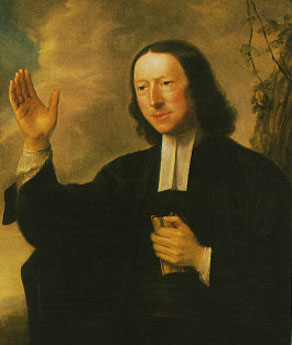
John Wesley, the founder of Wesleyanism and the Methodist church, was a minister throughout his years in college.  He became a minister proclaiming the news of God.  Yet, it was not until after he was already a ministry that he felt something more.  Wesley searched to understand who God was, instead of trying to have a relationship with God.  After that, he felt his heart strangely warmed and became even more effective in his ministry and his preaching of holiness.
 
Wesley's preaching of holiness was a description of this life of growing in relationship with God.  Our relationship is not a static thing that once we merely accept who God is that we can call ourselves "Christian."  Holiness is more dependent on living in such a way that we give everything over to God daily.  By this, I mean that our lives are to follow the very example of Christ.  We are to read the Scriptures, pray for God's guidance and strength, and begin to understand God by living in the story of love.

This can even go a step further.  In Romans 5:5 the verse reads, "and hope does not disappoint us, because God’s love has been poured into our hearts through the Holy Spirit that has been given to us."  This love is something that we only receive by accepting God into our hearts.  That love does not just remain empty either, but it compels us to go and love God and our neighbors.

Tuesday, September 10, 2013

Knowing What you Believe, and Living What you Believe

What does it mean to be a Christian?  Does this belief not focus on living the life that Christ lived on earth?  Christ is the beginning of this mission of Christianity.  Without Christ's life, death, and resurrection then there would be no such thing as Christianity.  Even if you may consider Christianity a "religion" and not a practice, I believe that Christianity is stereotyped this way because Christianity has given up.

Christianity's main ideas are focused on the life of the church. The church is a community that comes together under a set belief system.  People come together under one building to worship God, and to live the life of Christ.  Where many people have given up on Christianity is within knowing what you believe, and living that belief.


Both knowledge and action go together.  They do in fact represent two ways of life, yet they are held together in unison.  For example, you do not become a school teacher without knowing what it is your teaching.  A person cannot make a statement such as, I know what the laws of physics are, without ever taking a class on physics!  Same goes for Christianity, we cannot profess to be Christ followers, unless we know what we believe about Christ.

What many professing "Christians" like to do is say "I believe in Jesus," but then never see that person do anything to show that.  For example, I heard a student in a class say that they believed in Jesus Christ.  Yet, they then denied any knowledge of the Scriptures!  My question is how can you even know and follow Jesus Christ without ever knowing about him?

Another excuse many people use is how academia has taken these concepts, such as Christ and the Church, and made them out of reach for the every day person to understand.  As much as I would like to disagree with this statement, you cannot help but see some truth in it.  But should this deny our search for the knowledge of God?  Does not God want to be known? 

If we answer yes, then scholars cannot help but search for at least a framework to understand this deep and divine mystery known as God.  It's amazing to see the vast theories about who this God is and to understand that our finite words cannot even reach the divine mystery of God!  Anslem, an early church father, once described this search for God as "faith seeking understanding."  This life invites us to both know who God is, and also to live out that faith.

I do not mean that everyone of us should become biblical and theological scholars.  But I am saying that our churches, from the pastor, to the Sunday school teacher, to the bible studies, have a tremendous opportunity to discover the vastness of who God is.  Let us not ignore the search for who God is, but let us search for who He is and become participators in the dynamic story of God.

Wednesday, August 28, 2013

Theology and Culture

Our world has grown to understand such a variety of issues.  Science, music, sports, literature and a variety of other issues dominate our culture.  I wonder just how much theology has been talked about in our world?  With the discussion of homosexuality, the racial issues of America just about 50 years ago with Martin Luther King, and the latest discussions about the pope, it seems like there is a lot of discussion.  But do we all know what we believe in?


The reason I ask this question is because I see people who choose to let other people tell them what to believe.  People go to church wanting to get feed information about God, and then to go home and continue doing their own thing.  I feel like there is more to church then that.  I feel that church needs to be more about discussion and action rather then ignorance.  Instead of allowing church to be boring, people need to take action is learning, understanding, and living out the message.


Why do I go on about this?  I hear people talk about theology that is to far away from the church.  That theology is just for people like pastors and professors that teach that stuff.  Don't get me wrong, I am not saying that everyone should go out and get lots of theology books.  What I do want to say that theology is not out of reach of culture.  We need to know what we believe in.  Pastors bring the message of God to the congregation that allows the congregation to take that message and do something with it.

Here are some ways that I think people in the church can take the message and apply it.

1. Bible Study.  Most pastors offer a Bible study to go off their sermons.  This can be such a helpful time to understand the Scripture at a greater depth.  When I say at great depth, I mean understanding the Scripture passage for yourself.  Discuss it with others, ask questions about the passage.  Searching for a better understanding of the Bible helps to understand God's message.  Without a message, how can the church move on?  It can't!  We need to be able to discuss and understand the Scripture. 

2. Small Groups.  Small groups can be a great part of Bible studies to not only understand the meaning, but seeking ways to apply it to life.  Some churches do not have Bible studies.  Most will have small groups that are focused on understanding what it means to live in our world, and to offer encouragement to one another for the week.  This is an important time to offer prayers for the group, to keep each other accountable and to challenge one another to grow.


3. Setting time aside for devotion.  A lot of group activity is good to stay connected in the church.  It is very important to stay connected.  In addition to group discussions is personal time.  Personal prayer offers you time to give your everyday to God.  To give everything over and allow God to be your guidance for the day.  Setting time for Scripture is also important.  Scripture brings an encouraging Word from God that leaves us with a message to take with us for the day.

4. Pay attention to what is going on in the world.  One thing that has stuck with me as a wana be pastor is to carry the Bible in one hand, and a newspaper in the other.  Staying connected with our world is important.  Even though the news is not always the best information to hear, it is good to know what is going on.

Thursday, August 8, 2013

Living in a Culture in need of Community

Recently, I read an article in Time magazine about a change from living in suburban areas to living in more urban areas.  Why is this?  Well, the article went on to explain that suburban areas lack community.  Our generation seeks to be among other people.  Among other people at coffee shops, restaurants, malls, and etc.  Suburban areas do not have a lively atmosphere as do various cities.  I have been asking myself lately what happened? 

Many people say that we are living in a new age.  This is an age of equality, society, and relativity.  In other words, we have now moved from an age of individualism, reason, and capitalism to an age of postmodernism.  People are seeking to live a life together, with a sense of equality as well as in community.  Our generation is beginning a process of growing together in a new fashion that has unfortunately been ignored.

This is a crucial misunderstanding when it comes to understanding postmodernity.  Its not that postmoderns are not easy to understand.  Its that people are not taking the time to understand them (and maybe even understand themselves).  Thinking critically about this means taking an initiative to learn, to grow, and be in relationship.  We have taken something away from modernity that should have been left alone, and that is individualism.

Instead of seeking out the needs of others, modernity sought the needs of the self.  The self was the sole importance in the modern age movement.  It came to understanding this key principle in life that everyone was supposed to reach.  Modernity was about finding that one thing that everyone was to believe in, and if you found it, then you were on your way to being who your made to be.  Unfortunately, that one single most important thing is not what they found.

I named my blog Coffee Shop Theology because our postmodern world seeks community.  I think that modernism missed the mark through there individualistic mindset.  Instead of worry about the needs of the self, we should look to others.  A community means living together for a goal.  As a pastor, I believe the church needs to put their goal, purpose, and life in the hands of Christ.  Christ is the head of the church that leads the way for the church to go forward (Eph. 5:25-32; Col. 3:14-16).

Not only must the church find it's place in Christ, but the church must find its place in mission.  Service was the central characteristic of Jesus' ministry.  He did not focus on his own needs, but focused on the needs of others.  Jesus did not seclude himself from the world waiting for the day when God would make all things new.  Christ took initiative in coming to earth to redeem the world.  The church should not sit by praying for Christ to return, but to be present with us as we (the church) go out and serve others.

Sunday, July 28, 2013

Continuing on Toward Perfection: James 1:4

I have been working on a new book of Scripture to be translating.  To end this summer, I have begun work through the book of James.  The book of James was written for the purpose of instructing the diaspora Jews (those that left the area of Israel to a new land) to teach them the practices of Christianity.  Much of the book covers characteristics of work.  Martin Luther was in disagreement with the book of James because of it's strong emphasis on work that he felt it missed out on the teachings of faith. 

In the introduction of the book of James, the writer starts by identifying himself as James as well as stating the purpose of the book to "the twelve tribes scattered among the nations" (1:1).  Following this brief introduction, the writer proceeds to emphasize the necessity of trials and temptations.  These, according the James, produce perseverance (v. 3).  This verse then leads into verse 4 that speaks of growing in perseverance.

The NIV translates verse 4 to say, "Perseverance must finish its work so that you may be mature and complete, not lacking anything."  This verse seems to describe the importance of growth.  Growth that must reach a point of perfection.  The Greek word for "perfect" is teleion which is used twice in this verse.  Both times the NIV translates this word as "finish" and "mature." 

This word, teleion, speaks of the Wesleyan idea of sanctification.  Sanctification is a process that also happens in an instant, or what John Wesley called a "crisis point."  According to Wesley, sanctification was a continued process in life.  Even when we are sanctified by God's grace, we continue to grow.  As we apply this aspect of sanctification to this verse, we can see that Wesley agrees with what James writes about.

Sanctification is about growing and persevering through the tough times of life by living obediently to God's Word.  This growth sooner or later reaches a point where we are made "mature and complete."  However, it does not end there.  Our work continues on as we continue to "not to be lacking in anything" (v.4). 

Many people unfortunately misunderstand the concept of perfection.  We think that once we reach this point of perfection that we do not need to grow, or we think that we are done living in obedience.  This is not what sanctification is about, but it is about walking with Christ and realizing that you want nothing more than to be with Christ and to know about Him.  Sanctification is not something that we look to and hope will happen as we try and work for it, it is something that happens by the grace of God work in relationship with us.

James later goes on to mention about finding wisdom.  Wisdom is what we are to seek as we seek a relationship with the Lord to be with.

Saturday, July 20, 2013

Inspiring Creativity


Human imagination is a fascinating aspect of life.  As children begin to grow, their minds begin to develop, and even at a young age they make drawings (or scribbles) out of their imagination.  They see something, or someone they love, and they try to bring that certain thing to life in their drawings.  I personally love art.  Art is a huge part of imagination and beauty that is able to articulate things in a variety of ways.

Our imaginations are absolutely incredible and are capable of so much.  Art is not the only thing that our creativity can be revealed in.  Our very lives are a beautiful creative act by God that created the world out of nothing.  I like to imagine that the beginning of the world began also in a creative process of imagination.

In the beginning, when God created, humankind was created.   Now, humans were the last thing to be created in the story of the Bible.  So, humans had the ability to find out what everything else is used for.  This is also a continued process of our world today.  Just read books about physics, biology, and various other areas of science.  When the man picked up a set of blueberries to eat, he probably noticed the color of blue that came from the fruit.  The woman maybe then saw some beautiful yellow flowers and not only noticed the amazing aroma of the flower, but how the color may be mixed with this blueberry to make something new!

We all have the ability to be creative.  It’s amazing to realize that this is also the plan for humankind to pursue.  For example, Genesis 2: 15 say’s “The LORD God took the man and put him in the Garden of Eden to work it and take care of it.”  For scholars, this not only defines a theology of work, but creativity that God invites humankind to be a part of.  To work with the earth, to create, to work alongside with as we begin to make our beautiful imaginations come to life.

Some have unfortunately taken this verse to say that we can create whatever we want.  Humans can create anything as long as it provides for us.  We can kill anything, destroy anything, and make the world our way.  This is not what I believe God’s intent for creation was, nor is it a healthy view to take.  Humans are to work alongside the rest of creation by creating.  What I mean by that is we must be careful how much of the earth’s resources we use and how much we destroy for our own good.

A book that I am glad I got is called The Pocket Scavenger.  This is a book that involves looking for things that we may not notice every day.  Then, once we find these things, we make something new out of it.  For example, one thing you are to find is a piece of red string.  After you find this string, you flip the book over and turn to a random page and do whatever it says.  Like, make a creature out of it, smear something on it, or combine it with something else.

What I really love about this book is allowing the ability to see something beautiful out of everything in life.  Not only to see that thing because of its beauty, but to then add your own creative imagination to it.  Humanity is such a creative group.  Let’s allow our imaginations to run wild, to create beautiful things from everyday life.  To be creatures that participates in this amazing plan of God to be creative with alongside God and other creatures.